Are 2.4 GHz Bluetooth Jammers Legal? A Philippines and International Guide
A listing for a “2.4 GHz Bluetooth jammer” tells you how a seller markets the device. Whether you may import, possess, sell, or operate it depends on what it does and the rules where you live. Several countries restrict deliberate radio interference, and some also prohibit possessing or selling jamming devices.
Why I sell tools for Wi-Fi testing
I sell Wi-Fi testing tools because I want people interested in cybersecurity to get hands-on experience with a network they own. Learning how to check coverage, review router settings, and recognize connection problems gives you a practical starting point for securing your own network. Practice on your own equipment or on a network you have explicit permission to assess.
Always follow the radio and cybersecurity laws in the country where you test. Owning the network or getting the owner’s permission does not authorize jamming or interference with other communications. Check the local regulator’s rules before buying, importing, selling, or using equipment that can disrupt signals.
Philippines
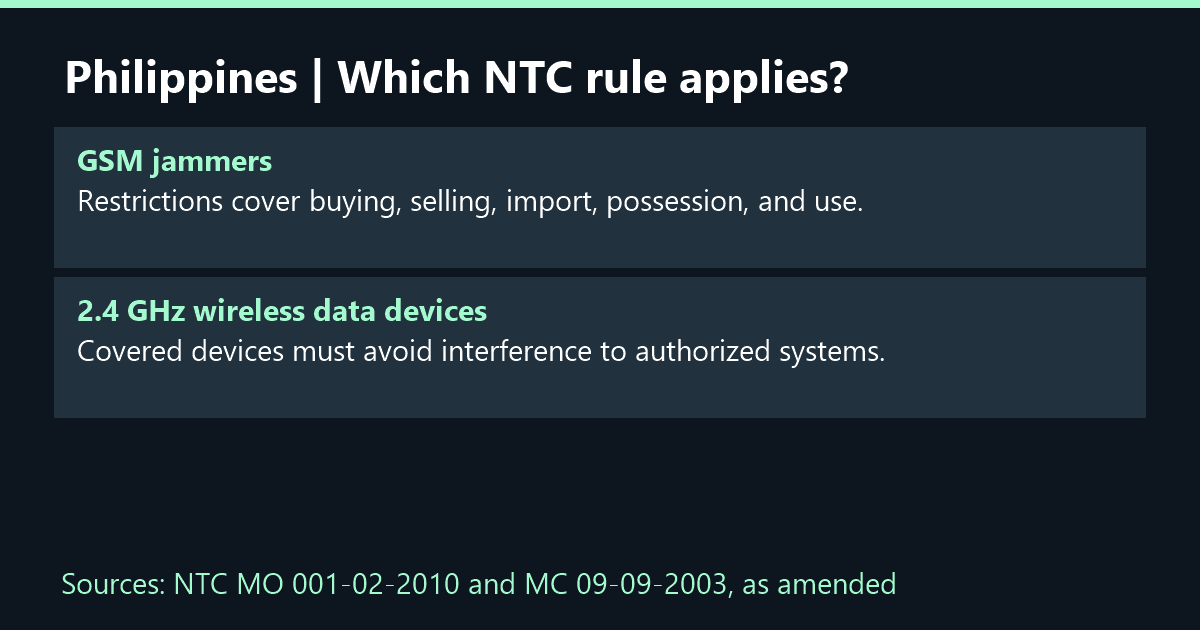
NTC Memorandum Order 001-02-2010, as published in the Supreme Court E-Library, prohibits selling, buying, importing, possessing, or using GSM jammers. The order allows the NTC to grant case-by-case exemptions under strict conditions. Its device-specific prohibition concerns cellular jamming.
A device marketed as Bluetooth-only raises a separate question. The NTC's rules for wireless data networks and devices, as amended, cover the 2.4 GHz band and require covered equipment to operate without interfering with authorized radio systems. A product's online description alone cannot establish its classification or approval status. For a specific device, ask the NTC which rules apply before ordering or operating it. NTC Memorandum Circular 09-09-2003 (PDF) · NTC Memorandum Circular 03-08-2013, amending the wireless-data rules (PDF)
United States, Canada, United Kingdom, and Australia
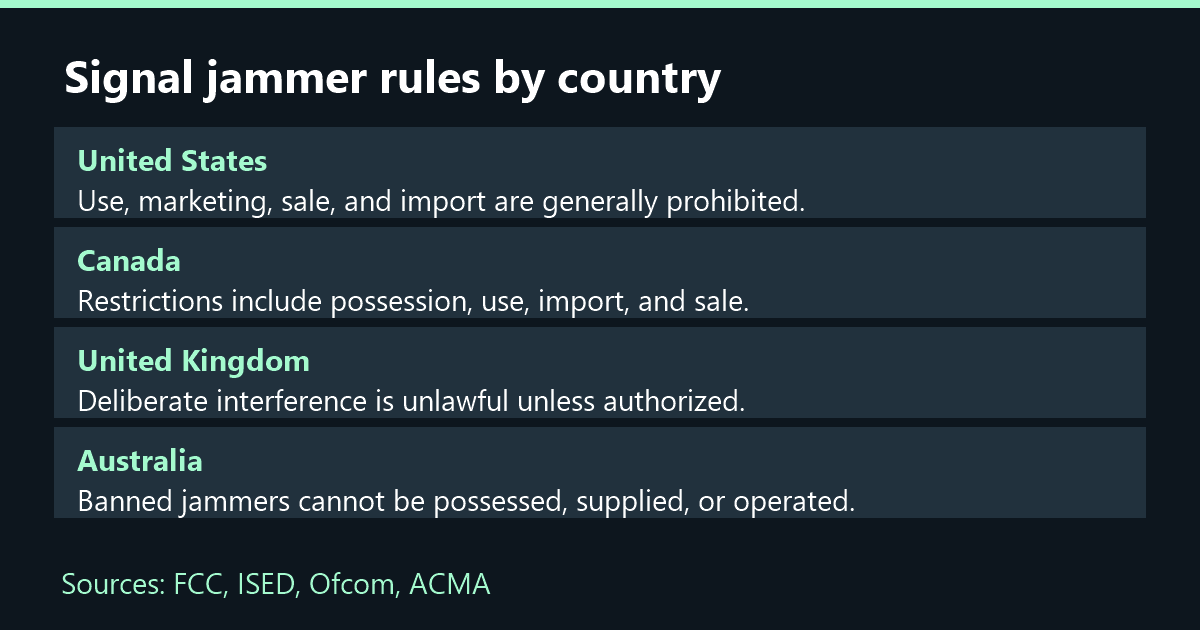
- United States. Federal rules generally prohibit using, marketing, selling, and importing signal jammers that interfere with authorized radio communications. This includes operation on private property. FCC enforcement advisory
- Canada. The Radiocommunication Act prohibits activities including possession, use, manufacture, importation, distribution, and sale of jammers. Canada's spectrum regulator also identifies unauthorized interference with radiocommunications as a separate prohibition. ISED guidance on jammers
- United Kingdom. Ofcom says deliberately using apparatus to interfere with wireless communications is unlawful unless authorized. Ofcom does not issue licences for jammer use. Ofcom radio equipment rules
- Australia. The communications regulator identifies Wi-Fi, mobile phone, GPS, and drone jammers among banned devices. It says operating, supplying, offering to supply, or possessing those jammers is prohibited. ACMA guidance on jammers
Why the 2.4 GHz label matters
Bluetooth Low Energy and some Wi-Fi networks share the 2.4 GHz band. Radio interference in that band can affect nearby equipment beyond the intended device. A dropped Bluetooth connection alone cannot establish that someone is jamming it.
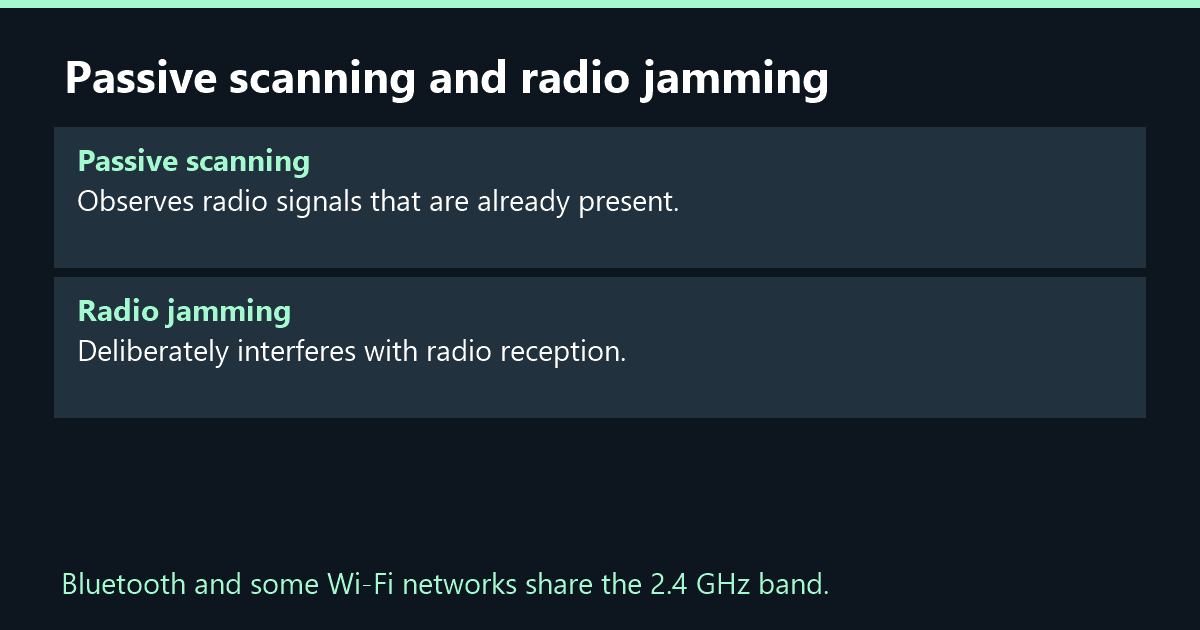
Passive scanning observes signals already present. Jamming deliberately disrupts radio reception. If you're investigating a connection problem, start with your own equipment and document when and where failures happen. For a related explanation of Wi-Fi disconnects and radio interference, see Wi-Fi Deauther vs. Jammer.